a

后台管理登录

生成图片验证码接口

1. 在common中引入EasyCaptcha依赖

1
2
3
4
<dependency>
<groupId>com.github.whvcse</groupId>
<artifactId>easy-captcha</artifactId>
</dependency>

2. 在common中引入redis依赖

1
2
3
4
<dependency>
<groupId>org.springframework.boot</groupId>
<artifactId>spring-boot-starter-data-redis</artifactId>
</dependency>

3. 在web-admin配置文件中配置redis信息

1
2
3
4
5
data:
redis:
host: localhost
port: 6379
database: 0

4. Controller&Service

1
2
3
4
5
6
@Operation(summary = "获取图形验证码")
@GetMapping("login/captcha")
public Result<CaptchaVo> getCaptcha() {
CaptchaVo captchaVo = loginService.getCaptcha();
return Result.ok(captchaVo);
}
  • 为方便管理,可以将Reids相关的一些值定义为常量,例如key的前缀、TTL时长,内容如下。大家可将这些常量统一定义在common模块下的com.atguigu.lease.common.constant.RedisConstant类中

    1
    2
    3
    4
    5
    6
    7
    public class RedisConstant {
    public static final String ADMIN_LOGIN_PREFIX = "admin:login:";
    public static final Integer ADMIN_LOGIN_CAPTCHA_TTL_SEC = 60;
    public static final String APP_LOGIN_PREFIX = "app:login:";
    public static final Integer APP_LOGIN_CODE_RESEND_TIME_SEC = 60;
    public static final Integer APP_LOGIN_CODE_TTL_SEC = 60 * 10;
    }
1
2
3
4
5
6
7
8
9
10
11
12
13
14
15
16
17
18
19
20
21
22
23
24
25
26
27
28
29
30
31
@Service
public class LoginServiceImpl implements LoginService {

@Autowired
private StringRedisTemplate redisTemplate;

// 生成图形验证码
@Override
public CaptchaVo getCaptcha() {
SpecCaptcha specCaptcha = new SpecCaptcha(150, 40);
specCaptcha.setCharType(SpecCaptcha.TYPE_DEFAULT);

String code = specCaptcha.text().toLowerCase();

// 图片转字符串
String image = specCaptcha.toBase64();

// 将验证码存入Redis
// redis key:唯一值uuid value:验证码四位值
String key = RedisConstant.ADMIN_LOGIN_PREFIX + UUID.randomUUID();
// 存入redis
redisTemplate.opsForValue().set(key, code, 60, TimeUnit.HOURS);

// 封装vo对象
CaptchaVo captchaVo = new CaptchaVo();
captchaVo.setKey(key);
captchaVo.setImage(image);
return null;
}
}

image-20260719221121951

image-20260719221152519

登录

1. 引入依赖

  • JWT
1
2
3
4
5
6
7
8
9
10
11
12
13
14
15
16
<dependency>
<groupId>io.jsonwebtoken</groupId>
<artifactId>jjwt-api</artifactId>
</dependency>

<dependency>
<groupId>io.jsonwebtoken</groupId>
<artifactId>jjwt-impl</artifactId>
<scope>runtime</scope>
</dependency>

<dependency>
<groupId>io.jsonwebtoken</groupId>
<artifactId>jjwt-jackson</artifactId>
<scope>runtime</scope>
</dependency>

手机号发送验证码接口

Controller

1
2
3
4
5
6
@GetMapping("login/getCode")
@Operation(summary = "获取短信验证码")
public Result getCode(@RequestParam String phone) {
loginService.getCode(phone);
return Result.ok();
}

准备工作

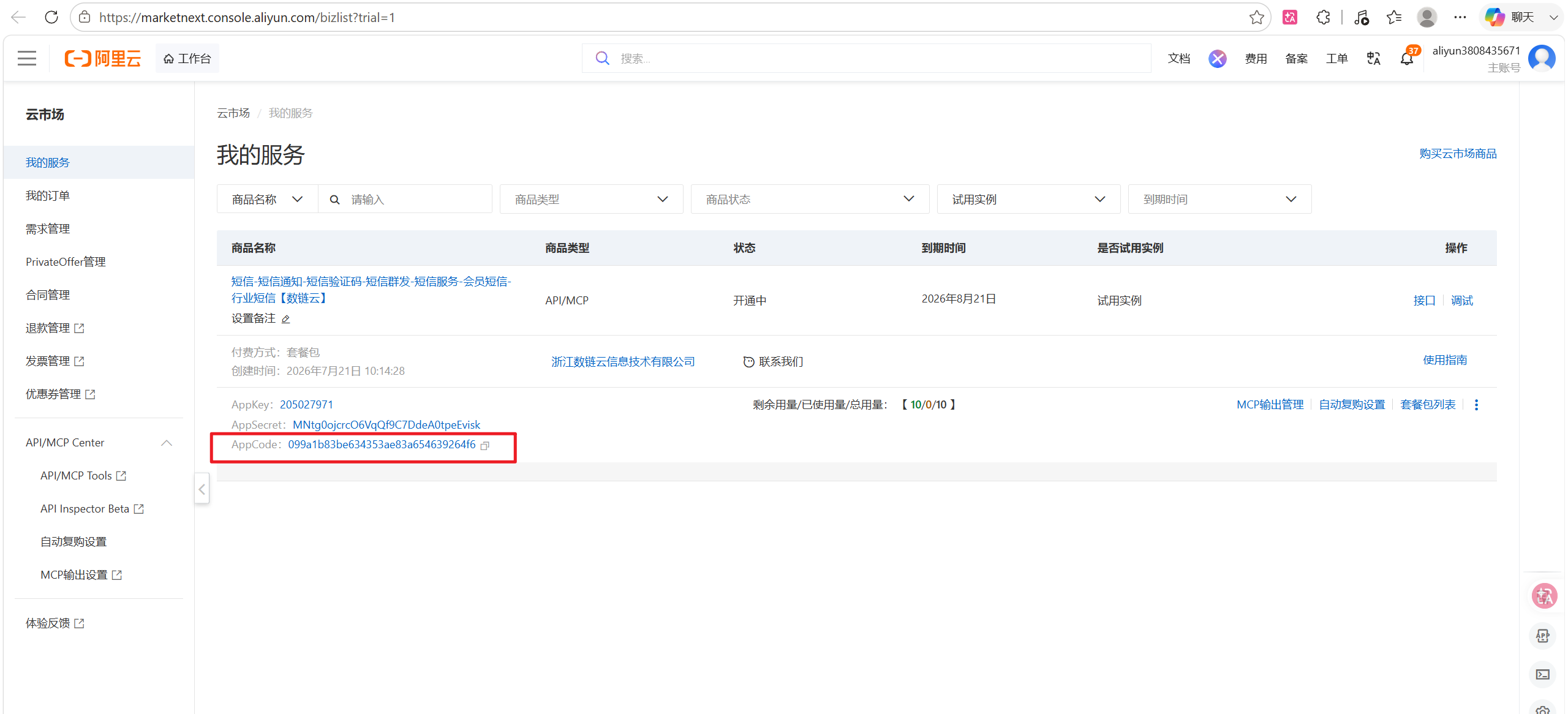
  • 使用阿里云短信服务实现发短信功能

  • 云市场-短信服务

  • 复制AppCode

    099a1b83be634353ae83a654639264f6

    image-20260721101614223

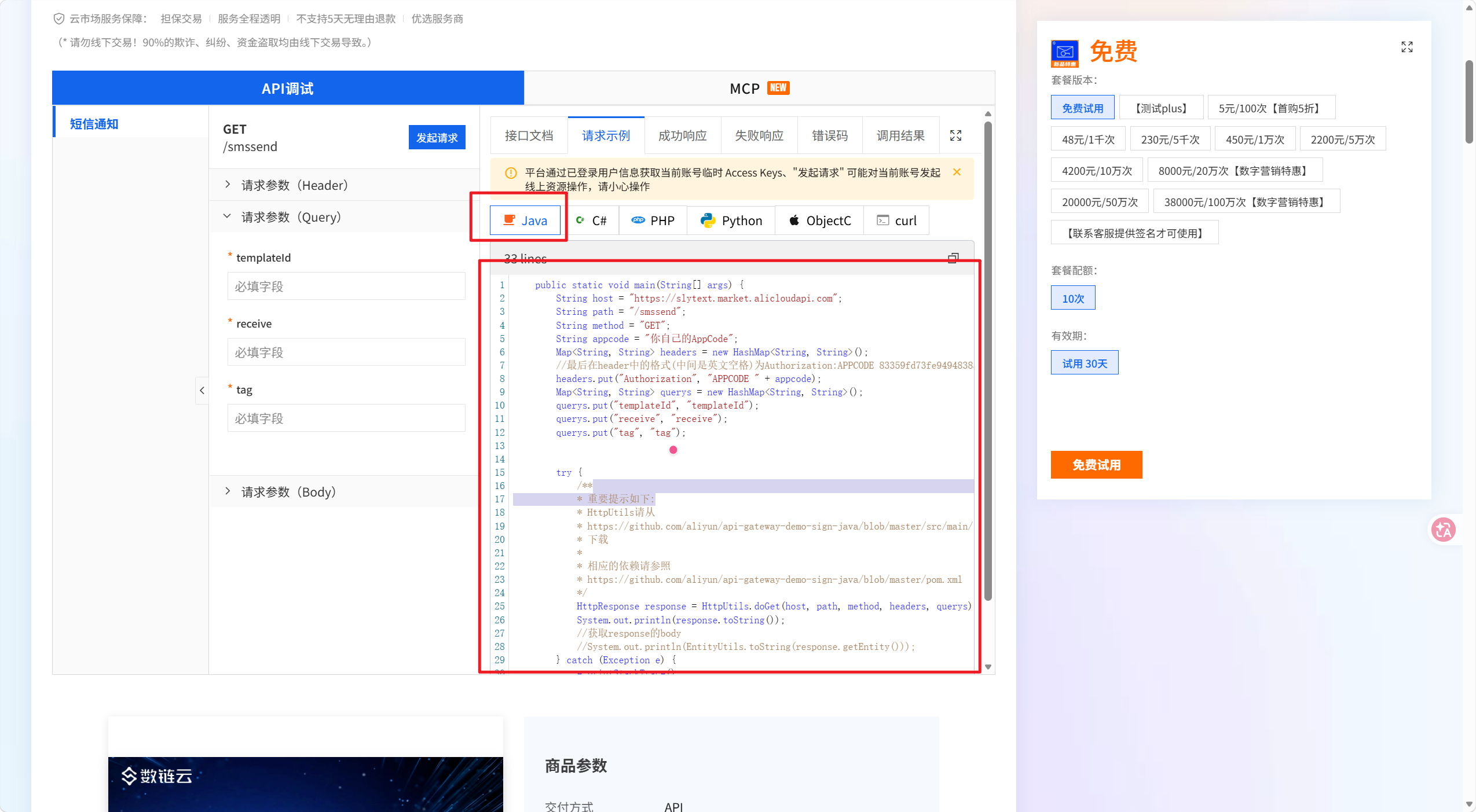
  • 返回购买界面查看官方文档

    image-20260721101842400

接口设计

1. 复制生成验证码工具类

1
2
3
4
5
6
7
8
9
10
public class VerifyCodeUtil {
public static String getVerifyCode(int length) {
StringBuilder builder = new StringBuilder();
Random random = new Random();
for (int i = 0; i < length; i++) {
builder.append(random.nextInt(10));
}
return builder.toString();
}
}

2. 复制需要的HttpUtils,引入依赖

1
2
3
4
5
6
7
8
9
10
11
12
13
14
15
16
17
18
19
20
21
22
23
24
25
26
27
28
29
30
31
32
33
34
35
36
37
38
39
40
41
42
43
44
45
46
47
48
49
50
51
52
53
54
55
56
57
58
59
60
61
62
63
64
65
66
67
68
69
70
71
72
73
74
75
76
77
78
79
80
81
82
83
84
85
86
87
88
89
90
91
92
93
94
95
96
97
98
99
100
101
102
103
104
105
106
107
108
109
110
111
112
113
114
115
116
117
118
119
120
121
122
123
124
125
126
127
128
129
130
131
132
133
134
135
136
137
138
139
140
141
142
143
144
145
146
147
148
149
150
151
152
153
154
155
156
157
158
159
160
161
162
163
164
165
166
167
168
169
170
171
172
173
174
175
176
177
178
179
180
181
182
183
184
185
186
187
188
189
190
191
192
193
194
195
196
197
198
199
200
201
202
203
204
205
206
207
208
209
210
211
212
213
214
215
216
217
218
219
220
221
222
223
224
225
226
227
228
229
230
231
232
233
234
235
236
237
238
239
240
241
242
243
244
245
246
247
248
249
250
251
252
253
254
255
256
257
258
259
260
261
262
263
264
265
266
267
268
269
270
271
272
273
274
275
276
277
278
279
280
public class HttpUtils {

/**
* get
*
* @param host
* @param path
* @param method
* @param headers
* @param querys
* @return
* @throws Exception
*/
public static HttpResponse doGet(String host, String path, String method,
Map<String, String> headers,
Map<String, String> querys)
throws Exception {
HttpClient httpClient = wrapClient(host);

HttpGet request = new HttpGet(buildUrl(host, path, querys));
for (Map.Entry<String, String> e : headers.entrySet()) {
request.addHeader(e.getKey(), e.getValue());
}

return httpClient.execute(request);
}

/**
* post form
*
* @param host
* @param path
* @param method
* @param headers
* @param querys
* @param bodys
* @return
* @throws Exception
*/
public static HttpResponse doPost(String host, String path, String method,
Map<String, String> headers,
Map<String, String> querys,
Map<String, String> bodys)
throws Exception {
HttpClient httpClient = wrapClient(host);

HttpPost request = new HttpPost(buildUrl(host, path, querys));
for (Map.Entry<String, String> e : headers.entrySet()) {
request.addHeader(e.getKey(), e.getValue());
}

if (bodys != null) {
List<NameValuePair> nameValuePairList = new ArrayList<NameValuePair>();

for (String key : bodys.keySet()) {
nameValuePairList.add(new BasicNameValuePair(key, bodys.get(key)));
}
UrlEncodedFormEntity formEntity = new UrlEncodedFormEntity(nameValuePairList, "utf-8");
formEntity.setContentType("application/x-www-form-urlencoded; charset=UTF-8");
request.setEntity(formEntity);
}

return httpClient.execute(request);
}

/**
* Post String
*
* @param host
* @param path
* @param method
* @param headers
* @param querys
* @param body
* @return
* @throws Exception
*/
public static HttpResponse doPost(String host, String path, String method,
Map<String, String> headers,
Map<String, String> querys,
String body)
throws Exception {
HttpClient httpClient = wrapClient(host);

HttpPost request = new HttpPost(buildUrl(host, path, querys));
for (Map.Entry<String, String> e : headers.entrySet()) {
request.addHeader(e.getKey(), e.getValue());
}

if (StringUtils.isNotBlank(body)) {
request.setEntity(new StringEntity(body, "utf-8"));
}

return httpClient.execute(request);
}

/**
* Post stream
*
* @param host
* @param path
* @param method
* @param headers
* @param querys
* @param body
* @return
* @throws Exception
*/
public static HttpResponse doPost(String host, String path, String method,
Map<String, String> headers,
Map<String, String> querys,
byte[] body)
throws Exception {
HttpClient httpClient = wrapClient(host);

HttpPost request = new HttpPost(buildUrl(host, path, querys));
for (Map.Entry<String, String> e : headers.entrySet()) {
request.addHeader(e.getKey(), e.getValue());
}

if (body != null) {
request.setEntity(new ByteArrayEntity(body));
}

return httpClient.execute(request);
}

/**
* Put String
* @param host
* @param path
* @param method
* @param headers
* @param querys
* @param body
* @return
* @throws Exception
*/
public static HttpResponse doPut(String host, String path, String method,
Map<String, String> headers,
Map<String, String> querys,
String body)
throws Exception {
HttpClient httpClient = wrapClient(host);

HttpPut request = new HttpPut(buildUrl(host, path, querys));
for (Map.Entry<String, String> e : headers.entrySet()) {
request.addHeader(e.getKey(), e.getValue());
}

if (StringUtils.isNotBlank(body)) {
request.setEntity(new StringEntity(body, "utf-8"));
}

return httpClient.execute(request);
}

/**
* Put stream
* @param host
* @param path
* @param method
* @param headers
* @param querys
* @param body
* @return
* @throws Exception
*/
public static HttpResponse doPut(String host, String path, String method,
Map<String, String> headers,
Map<String, String> querys,
byte[] body)
throws Exception {
HttpClient httpClient = wrapClient(host);

HttpPut request = new HttpPut(buildUrl(host, path, querys));
for (Map.Entry<String, String> e : headers.entrySet()) {
request.addHeader(e.getKey(), e.getValue());
}

if (body != null) {
request.setEntity(new ByteArrayEntity(body));
}

return httpClient.execute(request);
}

/**
* Delete
*
* @param host
* @param path
* @param method
* @param headers
* @param querys
* @return
* @throws Exception
*/
public static HttpResponse doDelete(String host, String path, String method,
Map<String, String> headers,
Map<String, String> querys)
throws Exception {
HttpClient httpClient = wrapClient(host);

HttpDelete request = new HttpDelete(buildUrl(host, path, querys));
for (Map.Entry<String, String> e : headers.entrySet()) {
request.addHeader(e.getKey(), e.getValue());
}

return httpClient.execute(request);
}

private static String buildUrl(String host, String path, Map<String, String> querys) throws UnsupportedEncodingException {
StringBuilder sbUrl = new StringBuilder();
sbUrl.append(host);
if (!StringUtils.isBlank(path)) {
sbUrl.append(path);
}
if (null != querys) {
StringBuilder sbQuery = new StringBuilder();
for (Map.Entry<String, String> query : querys.entrySet()) {
if (0 < sbQuery.length()) {
sbQuery.append("&");
}
if (StringUtils.isBlank(query.getKey()) && !StringUtils.isBlank(query.getValue())) {
sbQuery.append(query.getValue());
}
if (!StringUtils.isBlank(query.getKey())) {
sbQuery.append(query.getKey());
if (!StringUtils.isBlank(query.getValue())) {
sbQuery.append("=");
sbQuery.append(URLEncoder.encode(query.getValue(), "utf-8"));
}
}
}
if (0 < sbQuery.length()) {
sbUrl.append("?").append(sbQuery);
}
}

return sbUrl.toString();
}

private static HttpClient wrapClient(String host) {
HttpClient httpClient = new DefaultHttpClient();
if (host.startsWith("https://")) {
sslClient(httpClient);
}

return httpClient;
}

private static void sslClient(HttpClient httpClient) {
try {
SSLContext ctx = SSLContext.getInstance("TLS");
X509TrustManager tm = new X509TrustManager() {
public X509Certificate[] getAcceptedIssuers() {
return null;
}
public void checkClientTrusted(X509Certificate[] xcs, String str) {

}
public void checkServerTrusted(X509Certificate[] xcs, String str) {

}
};
ctx.init(null, new TrustManager[] { tm }, null);
SSLSocketFactory ssf = new SSLSocketFactory(ctx);
ssf.setHostnameVerifier(SSLSocketFactory.ALLOW_ALL_HOSTNAME_VERIFIER);
ClientConnectionManager ccm = httpClient.getConnectionManager();
SchemeRegistry registry = ccm.getSchemeRegistry();
registry.register(new Scheme("https", 443, ssf));
} catch (KeyManagementException ex) {
throw new RuntimeException(ex);
} catch (NoSuchAlgorithmException ex) {
throw new RuntimeException(ex);
}
}
}

1
2
3
4
5
6
7
8
9
10
11
12
13
14
15
16
17
18
19
20
<dependency>
<groupId>commons-lang</groupId>
<artifactId>commons-lang</artifactId>
<version>2.6</version>
</dependency>
<dependency>
<groupId>org.eclipse.jetty</groupId>
<artifactId>jetty-util</artifactId>
<version>9.4.44.v20210927</version>
</dependency>
<dependency>
<groupId>org.apache.httpcomponents</groupId>
<artifactId>httpclient</artifactId>
<version>4.5.13</version>
</dependency>
<dependency>
<groupId>org.apache.httpcomponents</groupId>
<artifactId>httpcore</artifactId>
<version>4.4.13</version>
</dependency>

3. Service实现

1
2
3
4
5
6
7
8
9
10
11
12
13
14
15
16
17
18
19
20
21
22
23
24
25
26
27
28
29
30
31
32
33
34
35
36
37
38
39
40
41
42
43
44
45
46
47
48
49
50
51
52
53
54
55
56
57
58
59
60
61
62
63
64
@Service
public class LoginServiceImpl implements LoginService {

@Autowired
private RedisTemplate redisTemplate;

// 发送手机验证码
@Override
public void getCode(String phone) {
// 1. 生成6位验证码
String verifyCode = VerifyCodeUtil.getVerifyCode(6);


// 2. 把验证码和手机号传递到阿里云进行发送
this.sendMessage(phone, verifyCode);

//3. 验证码发送成功,将验证码存入redis,设置过期时间,校验使用
// redis key: 手机号 value: 验证码
redisTemplate.opsForValue().set(phone, verifyCode, 60, TimeUnit.MINUTES);
System.out.println("verifyCode: " + verifyCode);
}

// 发送短信方法
private void sendMessage(String phone, String verifyCode) {
String host = "https://dfsns.market.alicloudapi.com";
String path = "/data/send_sms";
String method = "POST";
String appcode = "099a1b83be634353ae83a654639264f6";
Map<String, String> headers = new HashMap<String, String>();
//最后在header中的格式(中间是英文空格)为Authorization:APPCODE 83359fd73fe94948385f570e3c139105
headers.put("Authorization", "APPCODE " + appcode);
//根据API的要求,定义相对应的Content-Type
headers.put("Content-Type", "application/x-www-form-urlencoded; charset=UTF-8");
Map<String, String> querys = new HashMap<String, String>();
Map<String, String> bodys = new HashMap<String, String>();
bodys.put("content", "code:" + verifyCode);
bodys.put("template_id", "CST_ptdie100"); //注意,CST_ptdie100该模板ID仅为调试使用,调试结果为"status": "OK" ,即表示接口调用成功,然后联系客服报备自己的专属签名模板ID,以保证短信稳定下发
bodys.put("phone_number", phone);


try {
/**
* 重要提示如下:
* HttpUtils请从
* https://github.com/aliyun/api-gateway-demo-sign-java/blob/master/src/main/java/com/aliyun/api/gateway/demo/util/HttpUtils.java
* 下载
*
* 相应的依赖请参照
* https://github.com/aliyun/api-gateway-demo-sign-java/blob/master/pom.xml
*/
HttpResponse response = HttpUtils.doPost(host, path, method, headers, querys, bodys);
HttpEntity entity = response.getEntity();
String result = EntityUtils.toString(entity, "UTF-8");
System.out.println(result);
//获取response的body
//System.out.println(EntityUtils.toString(response.getEntity()));
} catch (Exception e) {
e.printStackTrace();
throw new LeaseException("验证码发送失败", 222);
}
}
}

登录接口

Controller

1
2
3
4
5
6
@PostMapping("login")
@Operation(summary = "登录")
public Result<String> login(@RequestBody LoginVo loginVo) {
String token = loginService.loginUser(loginVo);
return Result.ok(token);
}

ServiceImpl

1
2
3
4
5
6
7
8
9
10
11
12
13
14
15
16
17
18
19
20
21
22
23
24
25
26
27
28
29
30
31
32
33
34
35
36
37
38
39
40
41
42
43
44
45
46
47
48
49
50
51
52
53
54
55
// 登录功能
@Autowired
private UserInfoMapper userInfoMapper;

@Override
public String loginUser(LoginVo loginVo) {

// 1. 从LoginVo中获取验证码和手机号,进行非空判断
if (!StringUtils.hasText(loginVo.getPhone())) {
throw new LeaseException(ResultCodeEnum.APP_LOGIN_PHONE_EMPTY);
}

if (!StringUtils.hasText(loginVo.getCode())) {
throw new LeaseException(ResultCodeEnum.APP_LOGIN_CODE_EMPTY);
}

// 2. 判断验证码是否正确
// 将redis中验证码和 输入 做对比,redis的key为手机号
String redis_code = redisTemplate.opsForValue().get(loginVo.getPhone());
if (redis_code == null) {
throw new LeaseException("验证码错误", 222);
}


// 3. 验证码不相同,提示用户
if (!redis_code.equals(loginVo.getCode())) {
throw new LeaseException(ResultCodeEnum.APP_LOGIN_CODE_ERROR);
}


// 4. 验证码相同,判断当前手机号是否为第一次登录
LambdaQueryWrapper<UserInfo> wrapper = new LambdaQueryWrapper<>();
wrapper.eq(UserInfo::getPhone, loginVo.getPhone());
UserInfo userInfo = userInfoMapper.selectOne(wrapper);

// 5. 如果当前手机号是第一次登录->进行注册,
if (userInfo == null) {
// 把手机号信息添加到用户表
userInfo = new UserInfo();
userInfo.setPhone(loginVo.getPhone());
userInfo.setStatus(BaseStatus.ENABLE);
userInfo.setNickname("用户-" + loginVo.getPhone().substring(5));

userInfoMapper.insert(userInfo);
}

// 6. 判断用户是否被禁用
if (userInfo.getStatus().equals(BaseStatus.DISABLE)) {
throw new LeaseException(ResultCodeEnum.APP_ACCOUNT_DISABLED_ERROR);
}

// 7. jwt生成token,返回
String token = JwtUtil.createToken(userInfo.getId(), userInfo.getPhone());
return token;
}